
Leak and Pipe Repair in Magnolia
A drip under a sink is easy to see. A slow leak inside a wall, under a floor or along the water line in the yard often isn’t, until there’s a stain, a soft spot or a higher water bill. Finding the source is most of the job.
Older Magnolia homes may have had decades of plumbing changes: original pipe, later repairs and remodels, all joined together. In 98199, 49.8% of housing units were built before 1960 (Census ACS 2020–2024), so transitions between old and new pipe are common places to look.
Based in Magnolia at 4027 W Bertona St, Seattle
Signs of a hidden leak
- Water meter or leak indicator moving with everything turned off.
- Stains, bubbling paint or soft drywall on ceilings below bathrooms.
- Warped or soft flooring near tubs, toilets, dishwashers or the water heater.
- Musty smell or mold in a cabinet, closet or crawl space.
- A wet or unusually green strip in the yard along the water line route.
- Low pressure at fixtures that used to be fine.
Supply leaks vs. drain leaks
Supply leaks are pressurized, so they run all the time and show up on the meter. They come from pipes, fittings, shutoff valves, supply hoses and the water heater connections.
Drain leaks only leak when water is draining: a shower pan, a tub overflow, a cracked drain pipe, a toilet wax seal. They don’t move the meter, so they’re found by running specific fixtures and watching.
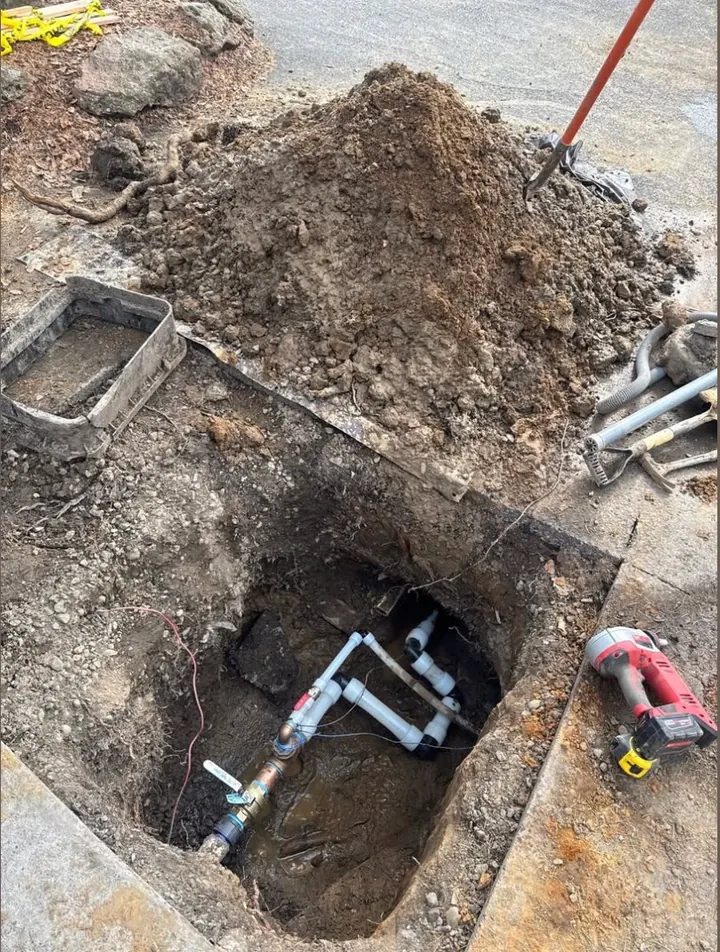
Pipe materials found in older Seattle homes
Older homes can have a mix of galvanized steel, copper, and in later remodels PEX or CPVC on the supply side, with cast iron, galvanized and ABS or PVC on the drain side. Galvanized steel supply pipe corrodes from the inside, which lowers pressure and causes leaks at threaded joints. Cast iron drain lines can crack or rust through, especially at horizontal runs.
Which materials are actually in your home only shows up on inspection. A repair at one bad spot is sometimes the right answer; repeated leaks in the same material usually mean planning a larger replacement.
Talk to us about leak repair
Call 206-593-3737, or send us a request online and we’ll get back to you.
Permits for leak repair and repiping
Public Health – Seattle & King County issues plumbing permits in Seattle. Its guidance says a permit is required whenever a plumbing or gas piping system is installed, relocated or changed. That covers repiping and relocating lines, while a like-for-like fix of a leaking fitting usually isn't a system change (Public Health). If we're unsure whether a job needs a permit, we'll check before starting. Leaks in the side sewer outside the house fall under SPU's side sewer permits instead (SPU).
After the leak is fixed
Dry the area quickly. Open up wet cavities if needed and run fans or dehumidifiers. Photograph the damage and the repair for insurance. If drywall or flooring got soaked, a water damage restoration company may be needed.
How a job works
- Call or send a request. Tell us what’s happening. If water or sewage is coming up, we’ll walk you through stopping it first.
- Find the cause. Clear the line or open the access, then look: a camera for sewers, a test for leaks and water heaters.
- Options in plain English. What we found, where it is, and the repair choices. You decide before work starts.
- Permit, work, inspection. Where Seattle requires a permit (SPU for side sewers, Public Health for plumbing), the work is permitted and inspected.
Leak Repair: common questions
How can I tell if I have a hidden water leak?
Turn off every faucet, appliance and irrigation zone, then watch the water meter or its leak indicator for several minutes. Any movement means water is flowing somewhere.
Do I need a permit to repair a leaking pipe in Seattle?
Public Health – Seattle & King County requires a plumbing permit whenever a plumbing system is installed, relocated or changed, which includes repiping. Ask before work starts whether your specific repair needs one.
Should I replace all my galvanized pipe?
Not necessarily all at once. If galvanized lines are leaking at multiple points or pressure has dropped, replacement is usually planned in sections or as a whole-house repipe, with a permit.
Where we offer leak repair
- Magnolia: our home neighborhood (98199).
- Queen Anne: mixed old and remodeled piping in older homes
- Interbay
- Ballard: from bungalows to newer construction
- Fremont: galvanized and cast iron in pre-war houses
Related services
- Emergency Plumbing: Sewer backups, burst pipes and major leaks: what to do first, and how to reach us fast.
- Water Heater Repair: No hot water, not enough hot water, leaks, relief-valve drips and pilot problems on gas and electric tanks.
- Water Heater Replacement: Replacing a water heater under Seattle’s 2026 permit rule, with gas, electric and heat-pump choices explained.
- Drain Cleaning: Kitchen, bath, laundry and main-line clogs cleared, with a camera when the clog keeps coming back.
Get help with leak repair
Call 206-593-3737, or send us a request online and we’ll get back to you.