
Side Sewer Repair and Replacement in Seattle
In Seattle, the pipe that carries wastewater from your house to the public sewer is called the side sewer. It belongs to you, not the City. That holds even for the part under the sidewalk or street, up to the City's connection. When it cracks, sags, fills with roots or collapses, fixing it is the owner's job.
This page covers how side sewer repair and replacement work in Seattle: the permits, the inspections, shared lines and the records worth pulling before anyone digs. It’s written for Magnolia homeowners, where we’re based, and for nearby neighborhoods.
Based in Magnolia at 4027 W Bertona St, Seattle
Where your side sewer starts and ends
SPU defines the side sewer as all piping outside the building footprint, except foundation drains, up to but not including the tee, wye or connection to the public main. Piping inside the building is plumbing, regulated and inspected by Public Health – Seattle & King County. Under the Seattle side sewer code, owners maintain the side sewer and are responsible for its condition (SPU permits; SMC 21.16).
In practice, a replacement project often includes three permit areas: plumbing inside the house (Public Health), the side sewer on your lot (SPU), and any digging in the planting strip, sidewalk or street (SDOT plus SPU).
Shared side sewers and easements
Some Seattle properties share a side sewer with a neighbor: the pipes join before reaching the main. SPU explains that from the point where pipes combine, the owners share maintenance and repair responsibility. There may also be a recorded easement or joint-use agreement tied to the property titles. The side sewer card can show the easement's recording number (SPU shared side sewers).
If your line is shared, it helps to agree with your neighbors on scope and contractor before work starts. SPU recommends at least three bids.
Side sewer cards: the record to pull first
The City keeps side sewer cards, historical records of side sewer permits and layouts for Seattle properties. You can look up your address on the side sewer card viewer. Cards can be old or incomplete, so they're a starting point; a camera inspection with a locator confirms the actual route and depth.
Talk to us about side sewer repair & replacement
Call 206-593-3737, or send us a request online and we’ll get back to you.
Repair vs. full replacement
A spot repair makes sense when the rest of the pipe is sound and the problem is in one place: one offset joint, one root entry point, one break. When a camera shows defects throughout, such as SPU's "severe exposed aggregate with holes" or multiple severe cracks and sags, full replacement by open cut, pipe bursting or lining is usually more sensible than repeated spot fixes (SPU defect grading).
What Seattle code requires of a new side sewer
When a side sewer is replaced, the new pipe has to meet SPU and code requirements. Among them:
- Minimum pipe size of 4 inches on private property serving one unit, and 6 inches in the right-of-way or for a sewer serving two or more units.
- No 90-degree bends or tees. Changes in direction use 45° or 22½° fittings.
- New sewer pipe longer than 10 feet must be pressure tested, with the test running when the inspector arrives.
- A minimum grade of 2% and minimum cover depths, set by code.
- No backfilling until the City inspector has seen the pipe. An as-built record is submitted afterward.
- Call 811 at least two business days before digging. Utility locators don’t mark privately owned lines such as your own side sewer.
Sources: SPU: Side sewer permits; Seattle Municipal Code ch. 21.16 (Side Sewers).
Who can do the work
Seattle code says side sewer work in a public place (planting strip, sidewalk, street) can only be done by a registered side sewer contractor (RSSC) working under the City's registration rules, with direct onsite supervision. Work entirely on private property can be permitted to the owner or their agent (SMC 21.16.055 and 21.16.080).
Separately, any plumbing contract work in Washington must be done by a licensed plumbing contractor, which you can verify on L&I. If your job reaches the planting strip, sidewalk or street, ask any contractor you’re considering to confirm their side sewer registration before you sign.
The process, step by step
- Clear the line if it’s blocked, then camera-inspect and locate it.
- Pull the side sewer card and check for a shared line or easement.
- Choose the repair type, then apply for the SPU permit (and the SDOT permit if the work reaches the right-of-way).
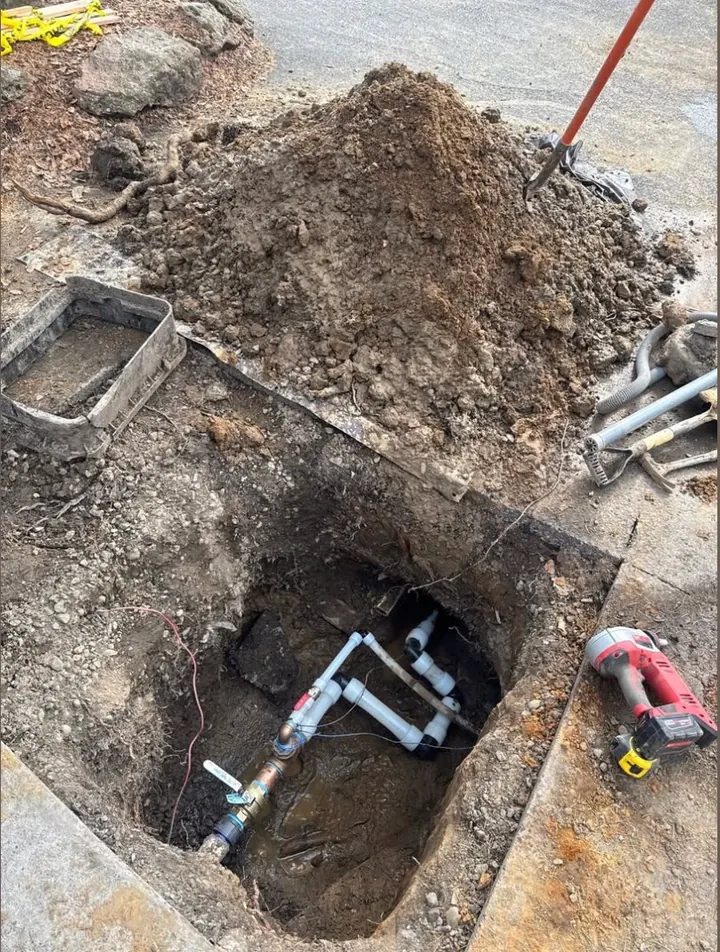
- Excavate or set the access pits, install, and pressure-test where required.
- The City inspects before cover, then the work is backfilled, the surface restored and the final inspection done.
How a job works
- Call or send a request. Tell us what’s happening. If water or sewage is coming up, we’ll walk you through stopping it first.
- Find the cause. Clear the line or open the access, then look: a camera for sewers, a test for leaks and water heaters.
- Options in plain English. What we found, where it is, and the repair choices. You decide before work starts.
- Permit, work, inspection. Where Seattle requires a permit (SPU for side sewers, Public Health for plumbing), the work is permitted and inspected.
Side Sewer Repair & Replacement: common questions
What is a side sewer in Seattle?
It’s the private pipe that carries wastewater from your building to the public sewer main. In Seattle the property owner owns and maintains it all the way to the connection with the main.
How much is a side sewer repair permit in Seattle?
SPU lists a sanitary repair permit on private property at generally $280 and a drainage repair permit at generally $375, each including one to two inspections. Right-of-way work has separate SDOT fees. These are City fees, not contractor pricing.
Who issues side sewer permits now, SDCI or SPU?
Seattle Public Utilities. As of October 1, 2025, SPU issues side sewer permits instead of the Seattle Department of Construction and Inspections. Applications go through the Seattle Services Portal.
My neighbor and I share a side sewer. Who pays for the repair?
SPU says owners share responsibility for the shared section, from where the pipes combine to the main. A recorded easement or joint-use agreement may spell out the details. Check the side sewer card and your title documents.
How long is a side sewer permit good for?
SPU says a side sewer permit is valid for 18 months unless it is renewed or other arrangements are made.
Where we offer side sewer repair & replacement
- Magnolia: our home neighborhood (98199).
- Queen Anne: steep lots can make access and excavation part of the plan
- Interbay: pull the side sewer card first; Interbay lots range from hillside homes to commercial parcels
- Ballard: converting a lot to more units can trigger SMC 21.16.240 testing or rehab of an existing side sewer
- Fremont: shared side sewers are worth checking on older narrow lots
Homeowner guides
- Seattle Side Sewer Permits: What Homeowners Need to Know: Ownership, permits, fees, inspections and contractor rules, all in one place.
Related services
- Trenchless Sewer Repair: Replace or reline a sewer pipe with less digging, where the pipe and site allow it.
- Sewer Repair: Broken, sagging, root-filled or backed-up sewer lines, diagnosed on camera before any digging.
- Sewer Camera Inspection: See inside your side sewer: roots, cracks, sags and offsets, and what the video and findings should show.
- Emergency Plumbing: Sewer backups, burst pipes and major leaks: what to do first, and how to reach us fast.
Get help with side sewer repair & replacement
Call 206-593-3737, or send us a request online and we’ll get back to you.